Kaylin Semkiw

|

Let’s Talk About Trout Children
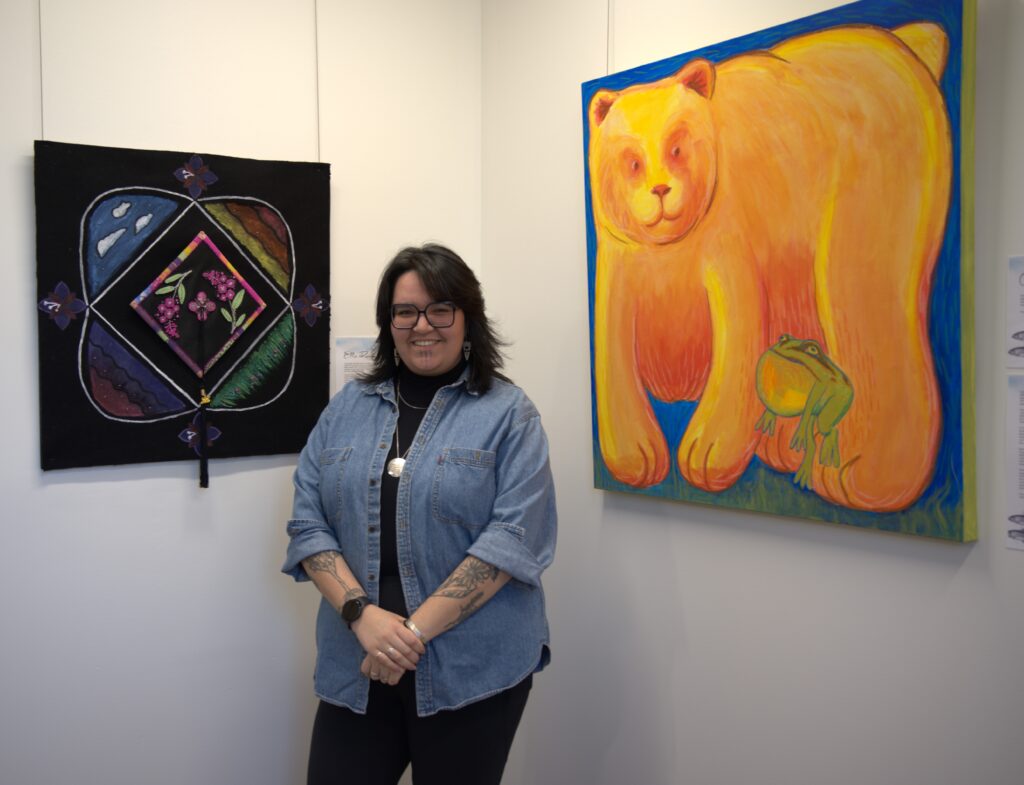
Shay Paul stands between two of Stínesten Gallery's art pieces, smiling. (Photo Taken by ___, TRU, 2026)

Shay Paul stands between two of Stínesten Gallery’s art pieces, smiling. (Photo Taken by Shanny N, TRU, 2026)

The Interview

What is Indigenous art? 

The Stínesten art gallery curator, Shay Paul, welcomes all guests through the doors of the art exhibition. She was more than happy to discuss the simple complexity of what makes Indigenous art what it is. All while the varying art pieces themselves are showcased around the gallery up close and at a distance. Paul’s involvement in the art world goes deeper than just this beautiful exhibition. She founded the Indigenous Resurgence Project (IRP) in 2021, but the roots of the project’s origins reside in 2018, under the name Artists for Reconciliation. The IRP is an Indigenous-led arts initiative, made to “build connection, visibility, and support for Indigenous artists in the Kamloops area and beyond.” (Shay Paul, 2021). The current exhibition, Trout Children, has pieces from ten Indigenous students and alumni from Thompson Rivers University. Each piece showcases one or multiple aspects of Trout Children’s theme: belonging, identity, and connection in various styles of creative contemporary practice.

The gallery is currently running as of the posting date of this article, and will continue on until May 2nd, 2026. For additional information of this wonderful exhibition, and to discover any future ones, check out the website:

Stínesten Gallery | Indigenous Resurgence Project. (2021). Resurgence Project. https://www.indigenousresurgenceproject.ca/stinesten
Shay Paul, the Stínesten art gallery curator, is interviewed by three TRU Students about the art gallery and Indigenous art.

Finding The Music

Instruments, singing practice, and roommates do not mix. This leaves any musically oriented or musically curious students in an odd spot. If this is you, fear not! This story is about highlighting the musical arts at TRU and giving students opportunities to get in touch with their musical side. The journalist collected a variety of voices to interview: an organizer, a negative opinion, and some positive opinions. Nicole Fernades is the head of the Music and Band Club at TRU. Ben Fifield, who is friends with the creator of this article, Kaylin Semkiw, expresses his view of the Music and Band Club. At the weekly Jam Session, two members agreed to have an interview, Kei Massalski and Thaelo Proctor. This story was gathered over the course of  two weeks, with four interviews, and two mic types.

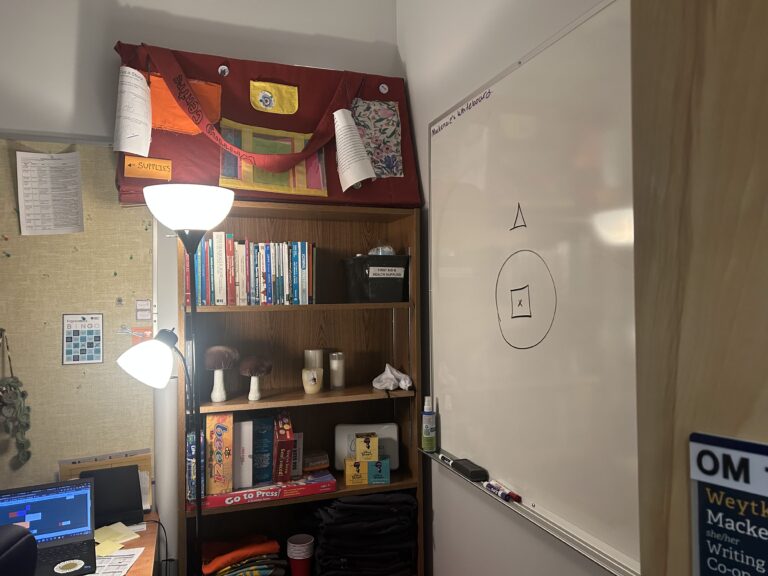
Image of a bookshelf in one of the Writing Centers offices. It holds many trinkets and books.

Hidden Respite: Creative Writing Fridays Explored

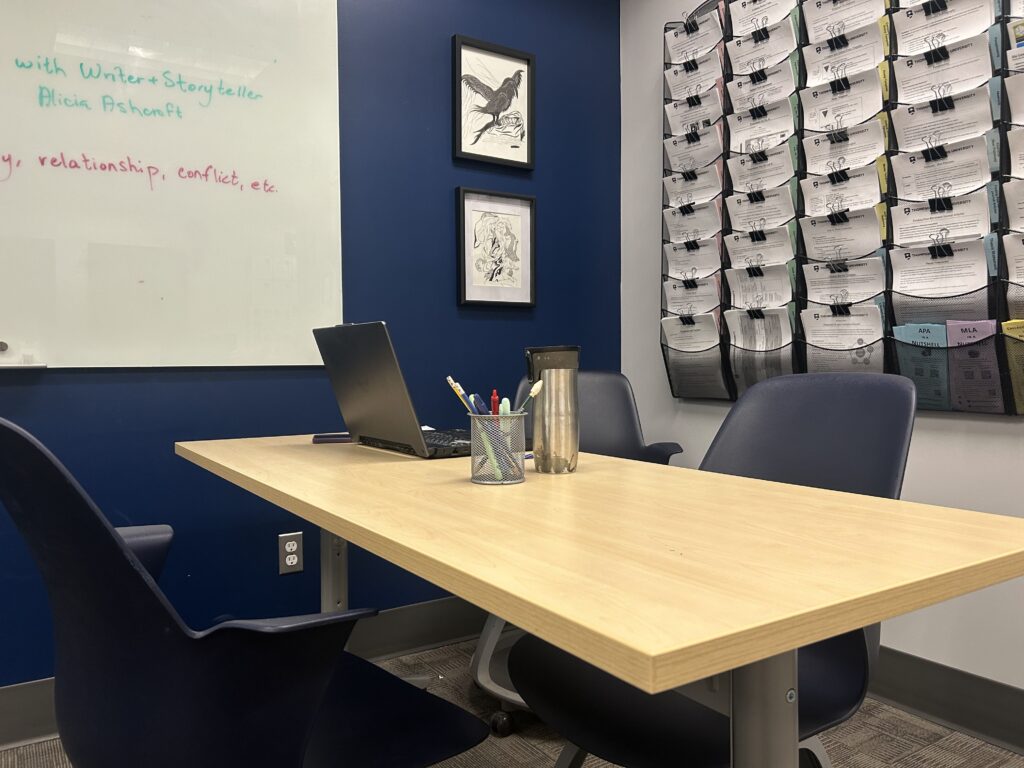
Respite is something most people hunt for during times of stress, such as midterms or deadlines. Students often can be found seeking respite in doomscrolling and other mindless, forgettable activities. Making things can be a respite to the stress people face from day to day, and Creative Writing Fridays can provide that outlet for the students who attend. Taking place weekly in the Writing Centre, it is open to anyone. It is an event that stems from community building, resulting in every new face to be greeted with a warm welcome.

“A great place for students to interact with faculty,” is how Jenna Goddard, the head of the Writing Centre, describes it.

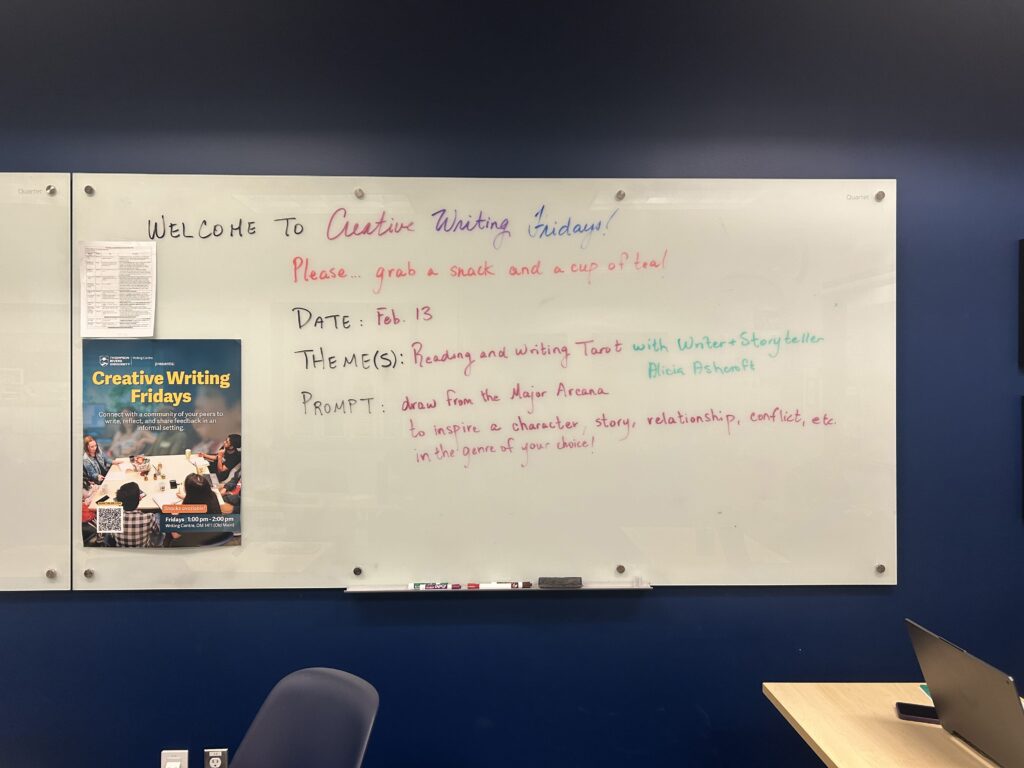
Each week, students are presented with a short presentation, then a prompt, and then are given a chance to write. After, students are allowed to share their piece if they so wish. Makomborero Chivasa enjoys the critiques he’s given from peers at these sessions. Lasting only an hour, a welcoming space to write and share is created.

Image of a white board and poster for Creative Writing Fridays.

Students like Chivasa come to Creative Writing Fridays to improve their writing. He welcomes peer feedback and always finds himself looking forward to the next session. Goddard believes building relationships is the foundation of Creative Writing Fridays, and that it “creates a space where anyone can feel welcome.” This event seems to have a trend of students who come to a session enjoy it enough to keep coming back.

Creative Writing Friday was made to balance out the associations with the Writing Centre. Since it typically only supports students with academic writing, students are typically not very happy when they come inside. The Writing Centre itself used to only be associated with negative connotations for students: that they weren’t good enough or that they were not a good writer for seeking out the Centre’s help. Creative Writing Fridays allow the Writing Centre to be more than just harsh-editing and doom. It lets students feel comfortable and find community in their peers who have the same passion as them.

As an organizer of the event Goddard believes she has the most privileged position considering that she gets to stay connected to people who give back to their community and she said “Students give me hope in a world that can feel hopeless at times.” Goddard is a very compassionate faculty member and is grateful to see students leaving the Writing Centre happier, calmer, or more assured than they were when they walked in.

Goddard’s passion for a small creative outlet such as Creative Writing Fridays could instill hope that the event will continue for a very long time.