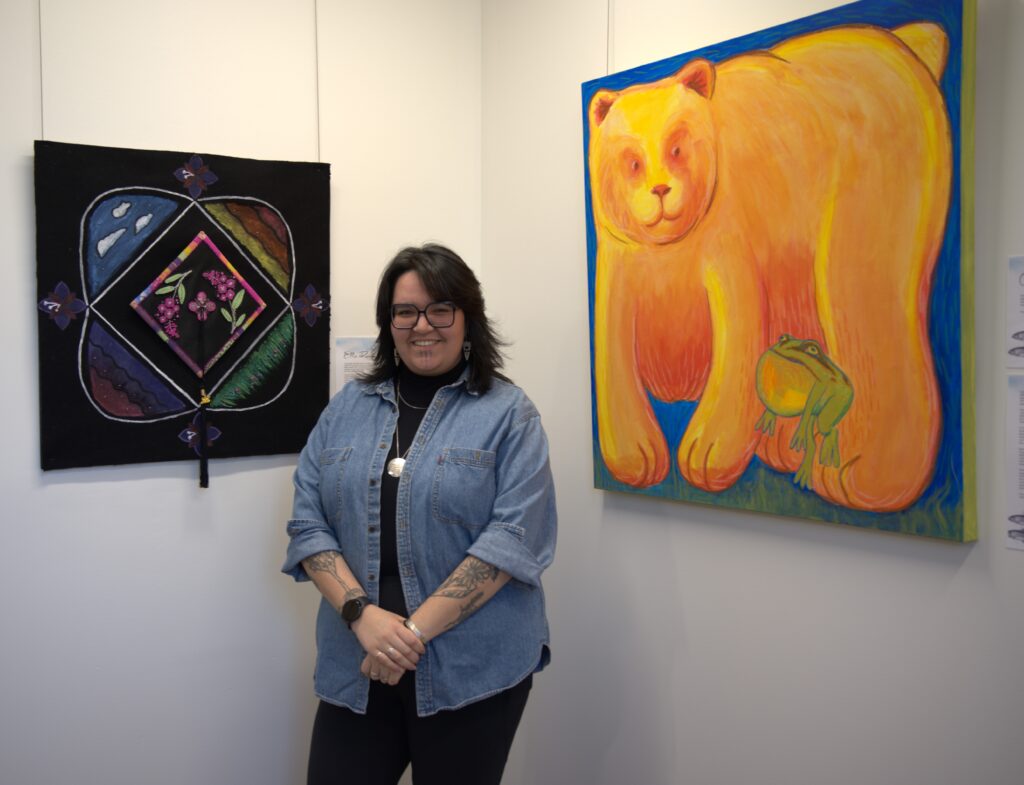
Shay Paul stands between two of Stínesten Gallery’s art pieces, smiling. (Photo Taken by Shanny N, TRU, 2026)
The Interview
What is Indigenous art?
The Stínesten art gallery curator, Shay Paul, welcomes all guests through the doors of the art exhibition. She was more than happy to discuss the simple complexity of what makes Indigenous art what it is. All while the varying art pieces themselves are showcased around the gallery up close and at a distance. Paul’s involvement in the art world goes deeper than just this beautiful exhibition. She founded the Indigenous Resurgence Project (IRP) in 2021, but the roots of the project’s origins reside in 2018, under the name Artists for Reconciliation. The IRP is an Indigenous-led arts initiative, made to “build connection, visibility, and support for Indigenous artists in the Kamloops area and beyond.” (Shay Paul, 2021). The current exhibition, Trout Children, has pieces from ten Indigenous students and alumni from Thompson Rivers University. Each piece showcases one or multiple aspects of Trout Children’s theme: belonging, identity, and connection in various styles of creative contemporary practice.
The gallery is currently running as of the posting date of this article, and will continue on until May 2nd, 2026. For additional information of this wonderful exhibition, and to discover any future ones, check out the website:
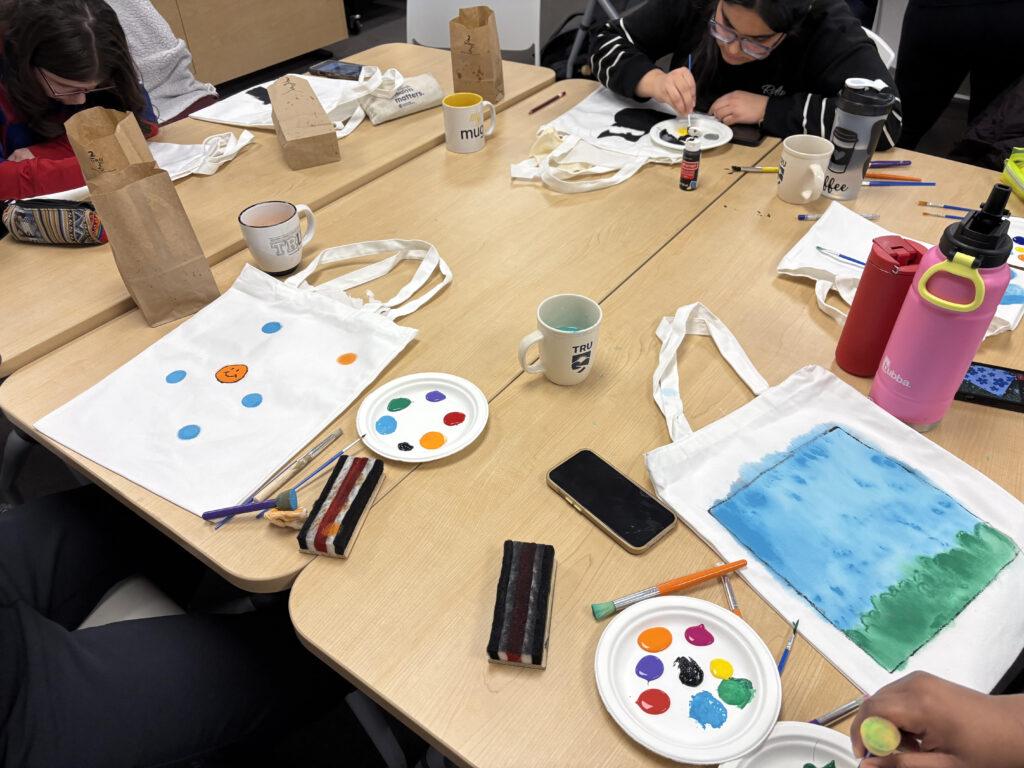
TRUesdays are a weekly on-campus event that is meant to help students meet new people while doing something fun. Each week offers a new activity, from air hockey to button making to tote bag painting. The sessions run on Tuesday evenings, from 5:30-6:30 in OM 1501.
The sessions are run by Kayla Sanford, who works at TRU. She uses these sessions as an easy, low-pressure way for new students to meet other students and get learning resources from faculty. One of the students, Oreo, thinks that these events provide a jumping-off point for making friends. Having a few friendly faces in the hallways can make a big difference in a new student’s life on campus.
The energy in the room is relaxed and will instantly make you feel comfortable and ready to chat. The casual nature of these events is their biggest asset. There is no need for tickets or a reservation; just stop by and say hello. If you don’t have anyone to go with, no problem. The other students are incredibly friendly and welcoming to newcomers.
This semester, TRUesdays will continue until April 7.
Find My Campus stopped by TRUesday for some tote bag painting and a chat with Kayla and a student in attendance.
Tru hosts ‘Stolen Sister Gatherings’ to offer support amidst a crisis that devastates indigenous communities.
According to the government of Canada, Indigenous women face a far greater risk of violence and homicide, with the rate of homicide being six times higher than that of non-Indigenous women from 2009 to 2021.
In a collaborative process, TRU’s Indigenous Student Services, Indigenous education, SVPR, Counceling and the Wellness Centre have been holding a support group for an open discussion on missing and murdered indigenous women and girls.
The gatherings stem from a weekly indigenous wellness circle held every Wednesday in House 5. During one of the circles, the topic of missing and murdered indigenous women came up. Many students wanted more support with the subject, so a regular group was created. Organizing the group was a careful, collaborative process involving TRU councillors, students and a Secwepemc elder to determine how to make the gatherings safe and supportive.
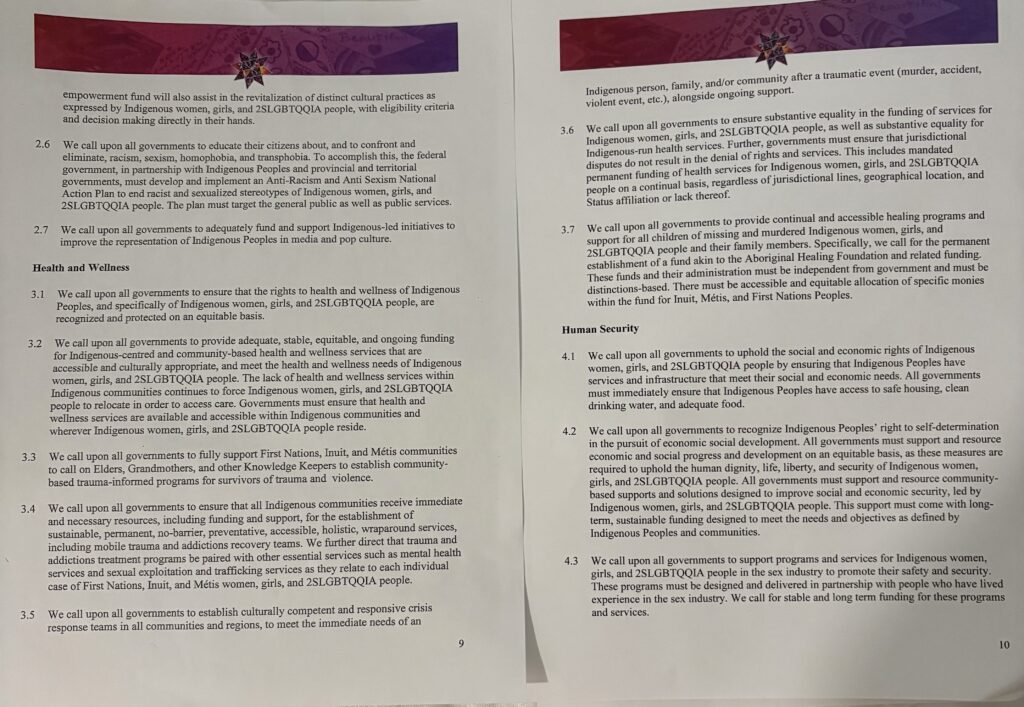
The National Inquiry’s 231 Calls for Justice are directed at governments, institutions and industries across Canada, detailing changes that should occur to resolve the challenges Indigenous communities face. These cover topics such as the rights to culture, health, and security. According to the Government of Canada, “The National Inquiry’s 231 Calls for Justice offer a powerful vision to end violence against Indigenous women, girls, Two Spirit and lesbian, gay, bisexual, transgender, queer and intersex (2SLGBTQI+) people, inspiring action across governments and partners.
Photo by Billie Gladue, Part 3 of the Calls for Justice
Each gathering lasts two hours, beginning with a free 45-minute lunch. According to TRU councillor, Andrea Brassard, “We start with lunch because it’s grounding, it’s connecting, it’s safety building.”
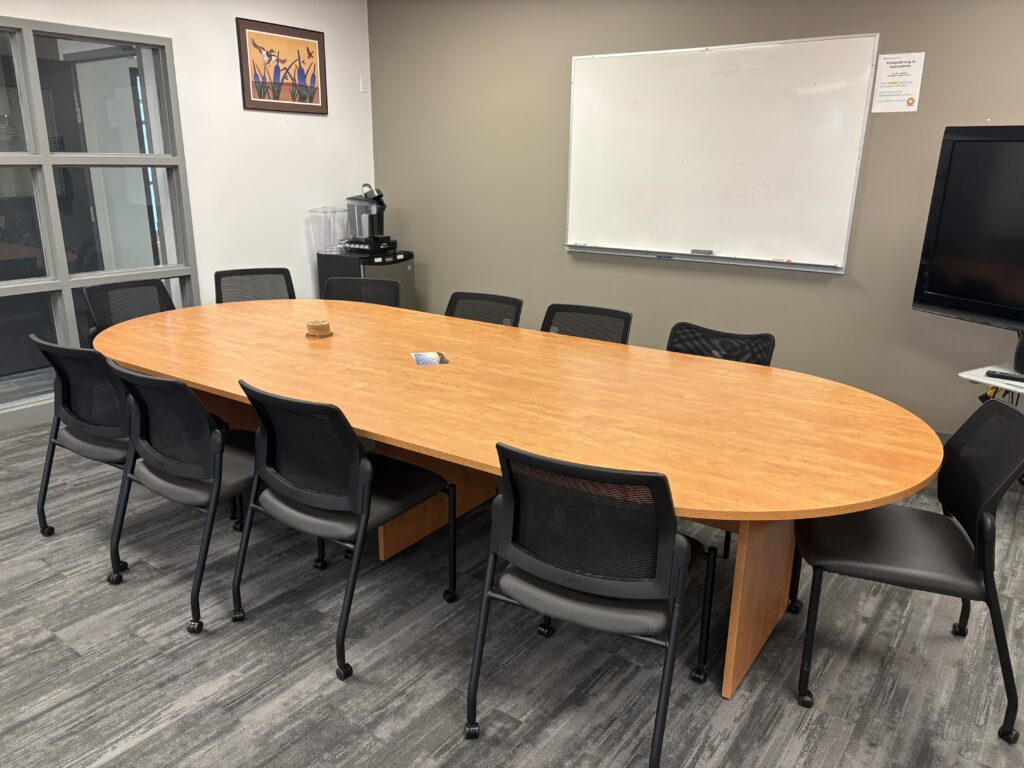
After lunch, the group moves to a table in the meeting room. The calls for justice are divided into 18 parts, each several pages long. Each gathering delves into one part with intention and discusses how it can be enacted. Each participant is encouraged to share what about the calls resonated with them and what significance it holds for them and their community. During the first gathering, each person had the opportunity to name the missing and murdered indigenous women in their own lives, an experience that is far too common in the indigenous community. Although the gatherings cover deeply personal and uncomfortable topics, the group is deeply grounded in safety and trust.
Photo by Billie Gladue, Meeting room for the gatherings. To maintain participant confidentiality, photos were not taken during the event.
“This was an opportunity to act on something that’s always been important to me, but there’s always been this holding it at a distance. I think because of the magnitude of it, because of how big, and powerful and scary it can be, or at least in my mind’s eye… The process itself has already taken that fear away, and what’s coming in its place is a sense of reclaiming power,” said Bassard.
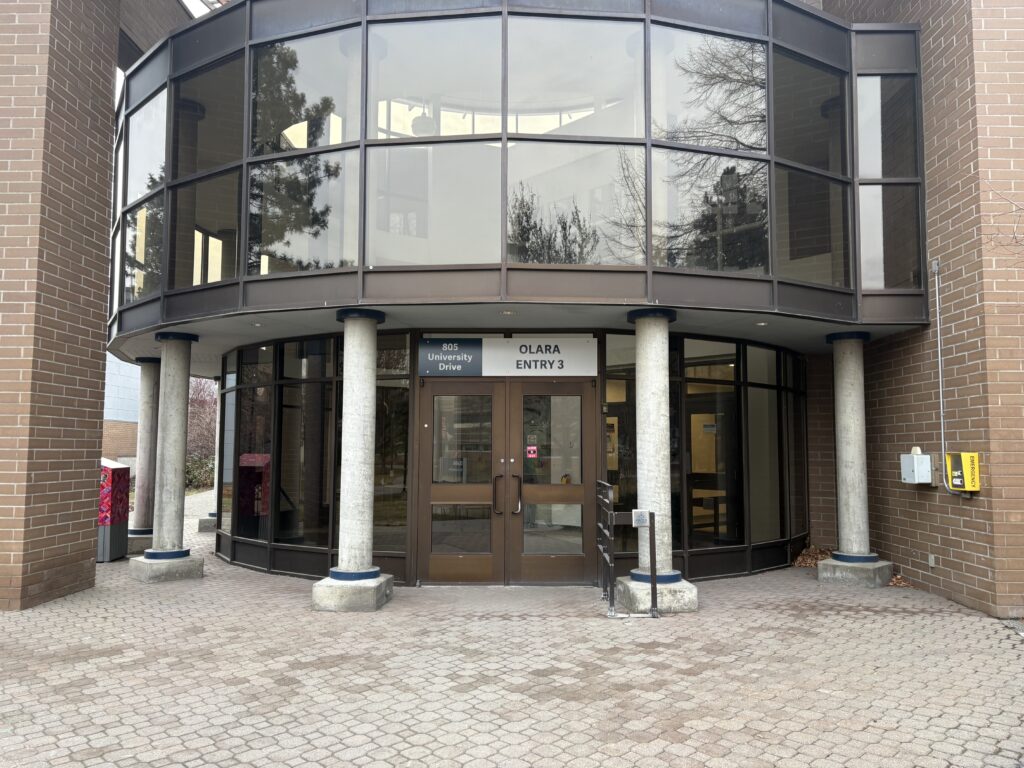
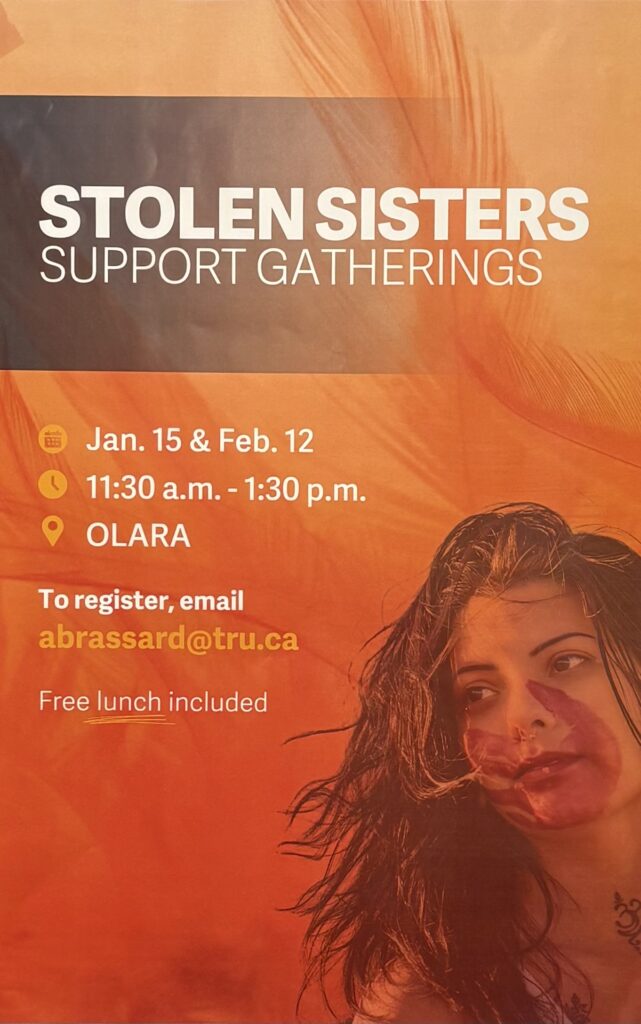
There is space at each gathering for 14 people, and it is open to students, faculty or individuals who value a supportive learning environment. The meetings take place in the OLARA building on the second floor.
Photo by Billie Gladue, Poster of Stolen Sister Support Gatherings